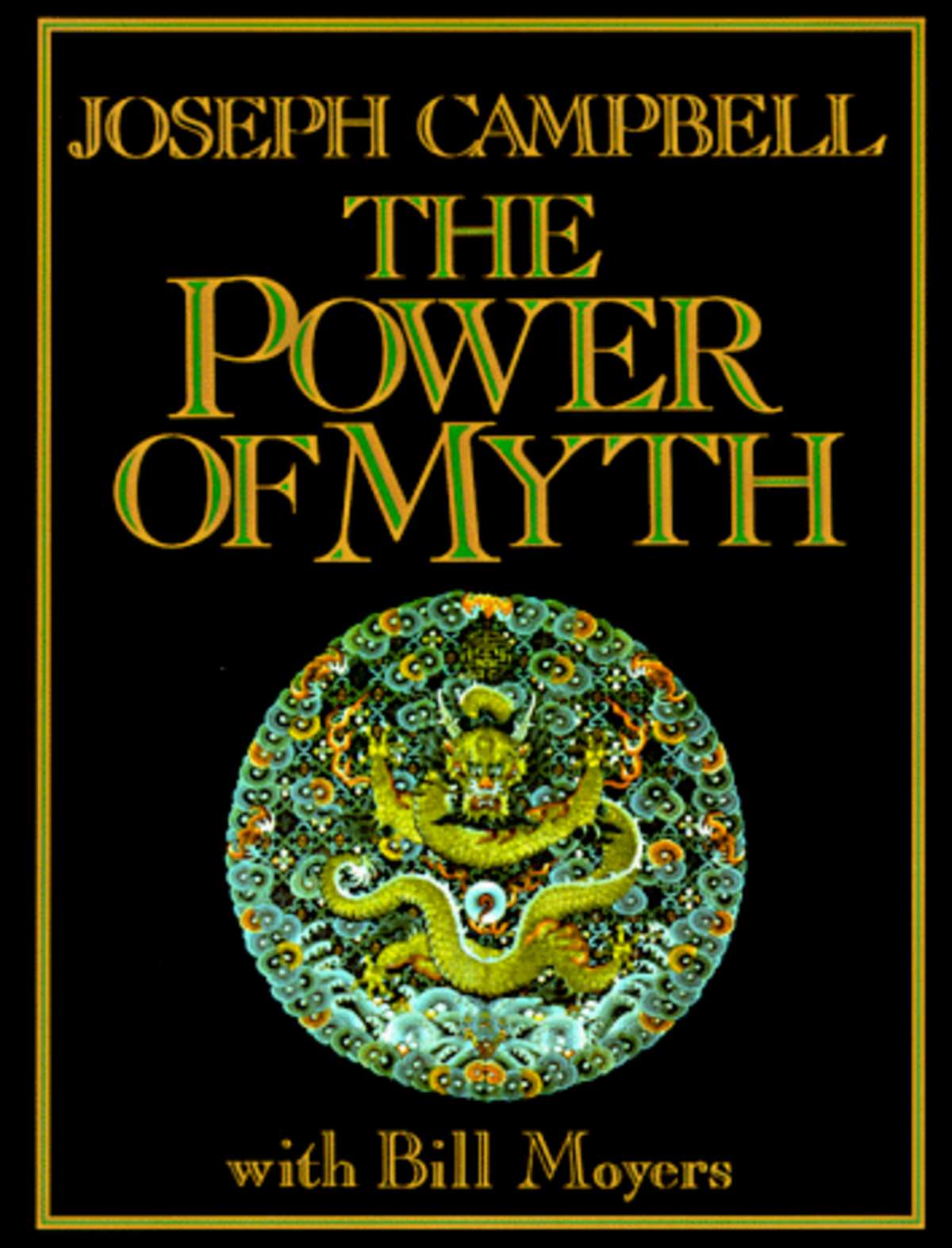
Lately, I’ve been rereading books that had a big effect on me when I was younger. We’re talking stuff I haven’t looked at in 20 years or more. Some of the books have sat on my shelves that long. The other day, I picked up The Power of Myth.
The book is a condensed version of journalist Bill Moyers’ televised discussion with mythology professor Joseph Campbell about life, stories, religion, society and so many other things. The talks took place at George Lucas’ Skywalker ranch in 1985/6 and were televised on PBS.
I didn’t see the PBS series, and I didn’t read the book until the mid-90s, I think. When I picked up my copy recently, I was surprised to see the Younger Me had written notes in the margins and underlined phrases, something I hardly ever do on the sacred pages of books! But that shows how much this book fired up my thinking about the fundamental importance of story/myth-telling for humanity.
My second reading hit me just as hard as the first, but in a totally different way. Now I’m a middle aged married mother, a professional author living abroad, and I’ve had a lot of life experience since I was in college. I need to step out of my daily life and ask the big questions: What does this all mean? What am I passing down to my kids? Have I been living life the way I intended? And the even bigger questions: Where do I find the rapture of being alive? What is the “cathedral consciousness,” the feeling of awe you get in a historic place or natural setting? What mysteries are in everyday things? What do the old stories from all over the world have in common, and what can they tell us today?
Campbell was talking in the 1980s, and he was an old man by then. He could look back on the entire 20th century and interpret the changes happening in the US and the world. Forty years later, one of his observations made me stop and think. He talked about how mythology helps people figure out how to be human in their time and place. When mythologies break down, people lose their orientation, their sense of community, rights of passage, or their touch with the spiritual in themselves and their world. Campbell believed this break down had happened in the US by the 1980s. What was needed, he said, was a new mythology. Not one based on nationalism or tribal, ethnic and religious boundaries; those are too narrow for global societies. It must be a mythology of the planet, stories that help us figure out how to relate to eachother and our world on the big scale we are now functioning on.
I think that’s the moment we’re now in. Things are volatile in the world right now partly because we’re all looking for orientation on a scale we as humans haven’t had to deal with before. Our old mythologies aren’t serving their purpose in the way they used to. But we humans need stories to learn and survive. What will our new stories be? Campbell said artists have always been the ones to risk telling new stories; writers, poets and other artists can be the shamans of our age if we dare to be.
Whatever people may think of Joseph Campbell’s thoughts today, he was hands down one of the most fascinating American thinkers of the 20th century. He refused to specialize, embraced the virtue of being a generalist, of learning from experts and noticing what connects all of us in the world, what makes all of us human. In a world splintering more and more every day, I loved reading the thoughts of someone who would have refused to play that game if he was alive today.
The Power of Myth is still a profound book, well worth studying.